

YEAR-ROUND KIDS CAMP IN MALAGA

High-quality EXPERIENCE FOR CHILDREN
Get ready for a cultural immersion experience at Vamos Academy Malaga's Summer Camp! Perfect for families exploring Spain or vacationing in Malaga, our dynamic program offers a ton of exciting activities. Rest assured, parents can count on their little ones having an immersive and enriching language experience with us.
Study plan · Spanish camp for children in Málaga
Summer & Winter Camp
A full-immersion Spanish camp for children, during the summer and winter holidays. Each day combines morning classes with games, workshops, sports and excursions in the afternoon (between 4 and 6 hours a day), so children live the language naturally and have fun. A safe, multicultural setting in Málaga, with verifiable progress from A1 to B2 and an internal certificate aligned with the CEFR.
For children and teens: classes + culture 4 to 6 h a day summer and winter multicultural groups CEFR certificate
Learn by playing, live the language
The camp uses the holidays to immerse children in Spanish. It isn't a traditional course: they learn through play, culture and friendship, in daily blocks of 4 to 6 hours.
Mornings
Playful Spanish classes
Around 3 hours of role-plays, songs, drama and projects. Children practise vocabulary and structures without the stiffness of a formal course.
Afternoons
Culture and adventure
Around 2 hours of excursions, art workshops, gastronomy, music and sports. A treasure hunt through central Málaga or a guided museum visit, all in Spanish.
How much progress?
At camp, progress is measured in accumulated hours, not in complete levels: each camp adds a block of hours to the child's journey. Depending on length, this is the estimated progress within a basic level (A1 or A2).
| Length | Hours a day | Total hours | Estimated progress (CEFR) | Example content |
|---|---|---|---|---|
| 2 weeks | 4 h/day | 40 h | Partial module (≈ 1/3 of A1 or A2) | Basic vocabulary, routines, role-play |
| 3 weeks | 5 h/day | 75 h | Intermediate module (≈ 1/2 of A1 or A2) | Past-tense narration, likes and preferences |
| 4 weeks | 6 h/day | 120 h | Complete module (≈ a full A1 or A2 level) | More fluent speaking and writing, cultural projects |
A child might start a camp at A1, add 40 hours and complete the level at another camp or in regular classes. Levels C1 and C2 aren't recommended for children's programmes: the realistic goal is to reach B1 or B2 in the teenage years.
Content by level
Each level sets out what the child achieves, the content they work on and a sample activity. Choose a level to see the detail.
"Your first words in Spanish, through play: you greet people, talk and describe what's around you."
What they achieve
- Understand and produce simple phrases in everyday contexts
Content
- The alphabet, greetings and introductions
- Numbers, the calendar and daily routines
- Regular verbs in the present and basic uses of ser, estar and haber
- Vocabulary for family, school, food and everyday objects
"You can tell stories now: you talk about what you did and what you like."
What they achieve
- Narrate simple experiences and express likes and plans
Content
- Common irregular and reflexive verbs
- The near future and expressions of obligation
- Comparatives and superlatives
- Vocabulary for clothes, transport, restaurants and leisure
"You manage on your own: you give opinions, narrate in detail and join simple debates."
What they achieve
- Cope with social and cultural situations independently
Content
- The preterite and imperfect past
- The subjunctive in wishes and recommendations
- Vocabulary for travel, media and technology
- Narrative and descriptive texts; guided debate on youth topics
"You argue with ease: you defend your ideas and take part in debates fluently."
What they achieve
- Argue and take part in debates fluently
Content
- The subjunctive in complex sentences
- The conditional and hypothetical sentences
- Advanced academic and cultural vocabulary
- Argumentative texts, group projects and authentic texts
How they learn
A communicative, experiential approach that blends Spanish with the recreational and cultural activities of the season.
Playful learning
Games, songs, drama, crafts and sports. Spanish is learned naturally and with fun.
Cultural immersion
Museum visits, art workshops and traditional festivals. The language is lived in direct contact with Málaga's culture.
Multicultural friendship
Children of different nationalities share Spanish as a common language, in group projects that build cooperation.
Assessment
Assessment supports the learning without losing the camp's playful spirit: it is based on daily observation and creative activities, never on rigid exams.
Initial diagnostic
A short oral chat and a simple activity place the child at their level (A1 to B2).
Ongoing assessment
Teachers observe participation and use of Spanish daily, in games and excursions, with age-appropriate rubrics.
Final assessment
A final activity (a group presentation and a short quiz) and a certificate with the hours and competences achieved.
Certification
Internal certificate aligned with the CEFR
Each camp gives a certificate with the hours completed, the level worked on and the competences achieved. Blocks add up across camps (summer and winter) and regular classes.
Preparation for young-learner exams
For those who want official accreditation, paths with exam simulations adapted to young learners and supervised by the Academic Director.
Shall we save their place?
Tell us your child's age and the dates you're interested in, and we'll give them a short placement check to put them in the right group. A summer (or winter) spent learning Spanish and making friends in Málaga.
REASONS WHY WE HAVE THE BEST SUMMER & WINTER CAMP FOR YOUR CHILDREN IN MALAGA

Our Methodology for the Malaga Camp
Welcome to our Kids Summer and Winter Camp in Malaga! Discover the joy of learning Spanish with a social approach. Our collaborative environment helps students feel comfortable practicing their skills while having fun. Cultural elements like music and food enhance their appreciation of the Spanish-speaking world. Join us for language and cultural exchange in a supportive community.
At our camp, mistakes are opportunities for growth. In a social educational setting, students feel safe to take risks without fear of judgment. Traditional classrooms can be intimidating, but we celebrate every learner's progress. Our goal is to make Spanish learning enjoyable and engaging for kids.
Immerse yourself in the vibrant world of Spanish-speaking cultures through music, food, and exciting activities. Our camp goes beyond the classroom, ensuring children feel confident expressing themselves in Spanish. With dedicated staff and a positive atmosphere, we create an unforgettable language learning experience.
Join our Kids Summer Camp in Malaga and embark on a journey of language, culture, and friendship. Let's make this summer memorable!
HAVE FUN AND LEARN SPANISH IN MALAGA
Learning a new language in the summer has never been this fun and engaging. Our small group sizes provide an ideal environment for your children to reinforce and improve their language skills, acquired throughout the year.
Our Summer Camp guarantees to boost your child's confidence and autonomy in the language.
In addition to our immersive language curriculum we offer a variety of exciting activities and games that keep your child in constant contact with the language. By creating a social learning environment, we make it easy for your child to learn and enjoy the process. Don't miss out on this opportunity to give your child a summer full of laughter and learning!
KIDS SUMMER CAMP ACTIVITIES IN MALAGA
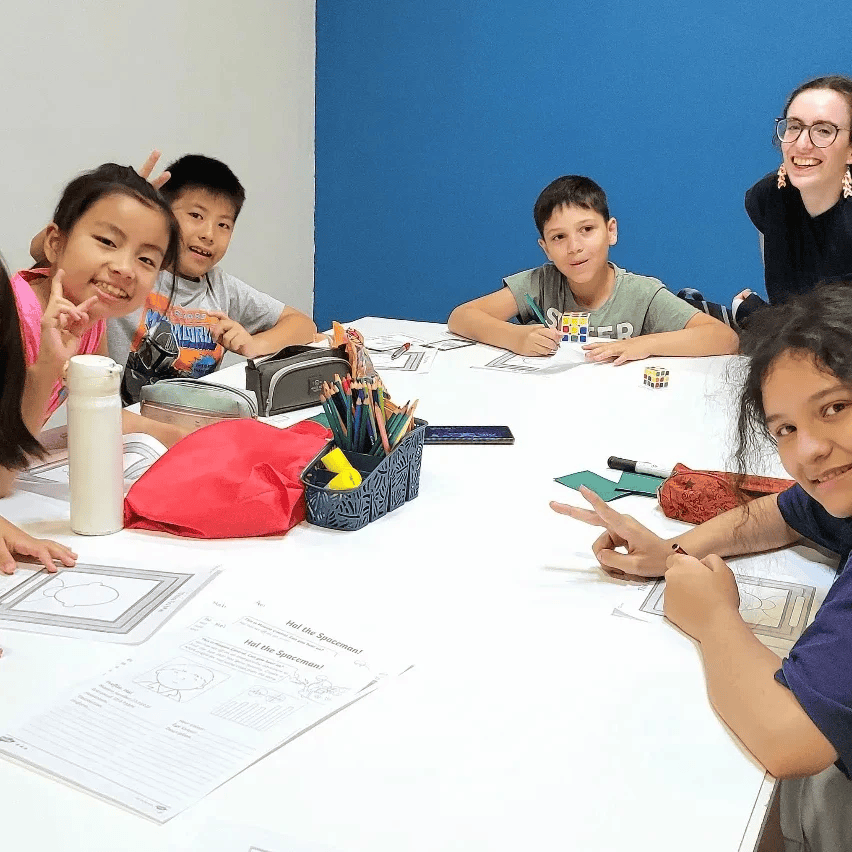
Our program is jam-packed with fun and excitement for everyone! At the Vamos Academy Summer Camp, we offer a wide array of sports and activities designed to promote teamwork and friendly competition among our students. With weekly challenges that are conducted entirely in a bilingual format, we guarantee a joyful and inclusive experience that will keep you coming back for more!
-
Games: A mix of traditional sports and creative games designed to keep our campers active and entertained.
-
Arts and Crafts: Kids tap into their creative side with various craft projects, using both traditional and unconventional materials.
-
Cooking Classes: Our young chefs learn how to prepare traditional Spanish dishes, emphasizing local Malaga cuisine.
-
Spanish Language Lessons: Make the most of your time in Malaga by learning Spanish from native speakers in a fun, engaging environment.
-
Theatre Workshops: Kids have the chance to shine on stage with our drama workshops, developing confidence and communication skills.
- Music Classes: From traditional Spanish guitar lessons to forming a summer camp band, we embrace the universal language of music
-
Dance Workshops: From flamenco to modern dance, our instructors will get kids moving to the rhythm in no time.
HIGH QUALITY SPANISH TEACHERS IN LA MALAGUETA
Academic excellence is one of our main drivers. That's why our academic leadership ensures that each student is assigned to a group based on their goals and needs.
With this approach, we ensure that every student receives the necessary attention during each activity, allowing our tutors to provide dynamic and enjoyable classes, providing each of our students with a much more effective learning experience.

best location in la malagueta
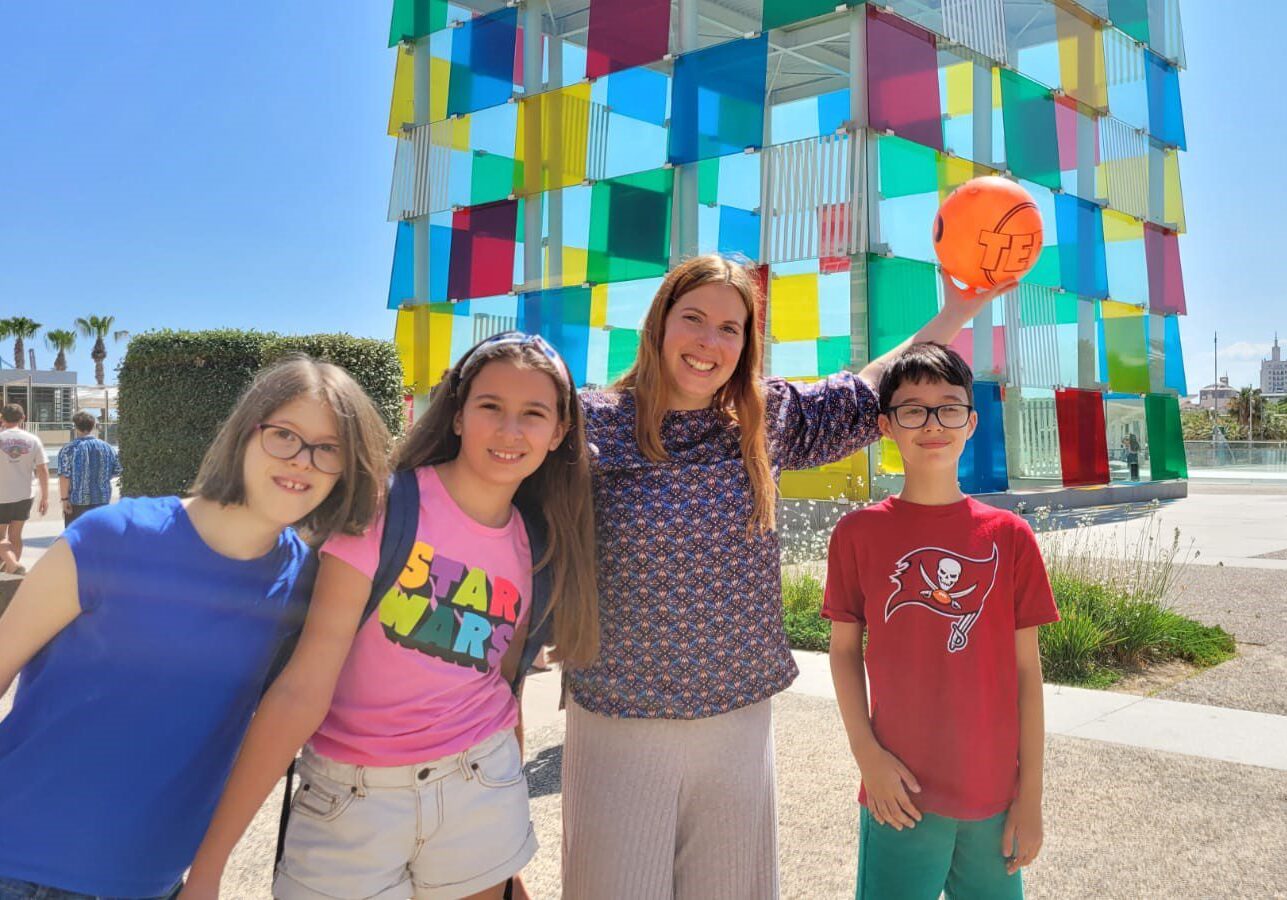
Discover the perfect summer getaway for your kids at Vamos Academy's Summer Camp in La Malagueta, just a block away from the beach!
With a wide variety of beach activities and adventures to enjoy, your little ones are sure to have a blast in the sun. Plus, we're conveniently located a few blocks away from the historic center of Malaga, so they can explore the city's rich culture and heritage too. Enroll now and give your kids the ultimate summer experience!
OUR PRICING AND OPTIONS AT OUR SUMMER CAMP IN MALAGA

















SPANISH CLASSES FOR PARENTS IN MALAGA
Exceptional Spanish education should be accessible to all. Our fair price policy allows us to offer outstanding group classes at just €200 per week, a rate considerably more affordable than most of our competitors. Contrary to the misconception that lower prices equal lower quality, our academy's efficiency and expertise enable us to deliver premium Spanish courses without breaking the bank. Our dedicated and experienced instructors, immersive teaching methods, and dynamic learning environment ensure a top-notch language learning experience at an unbeatable value. Choose Vamos Academy for high-quality, budget-friendly Spanish education.
ANY QUESTIONS? BOOK A FREE CONSULT WITH US TODAY!
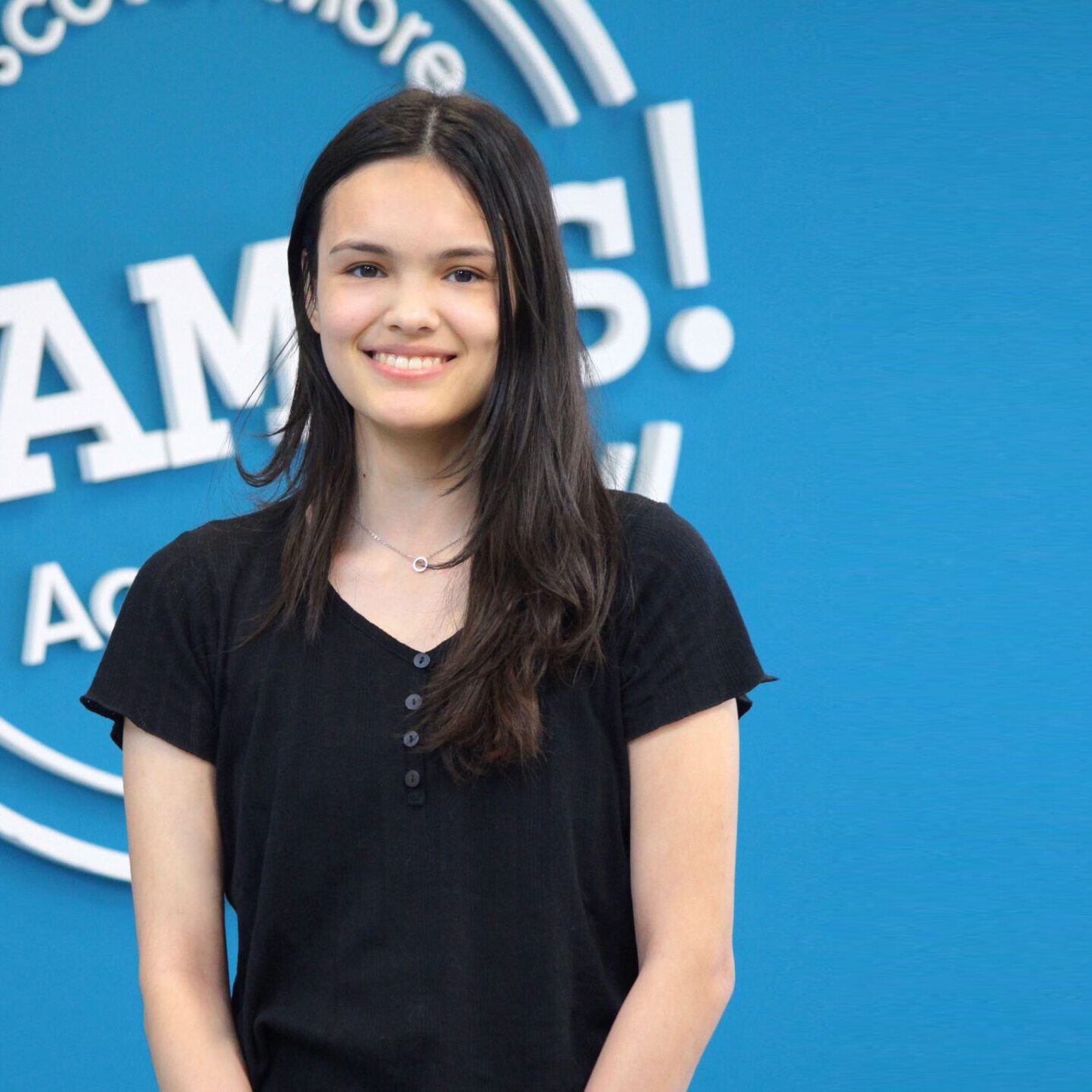
MEET OUR EXPERIENCED TEAM OUR SUMMER CAMP TEACHERS
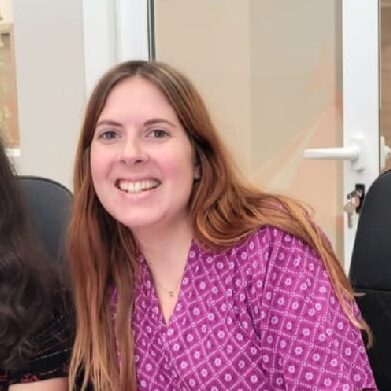
Irene
Spanish Teacher
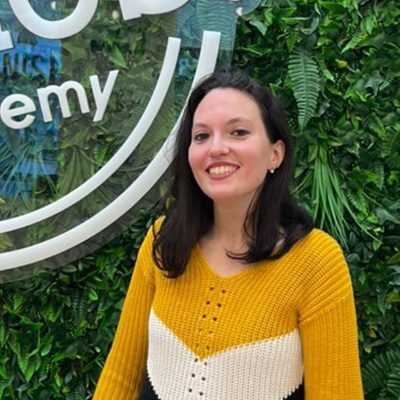
Amalia
Spanish Teacher
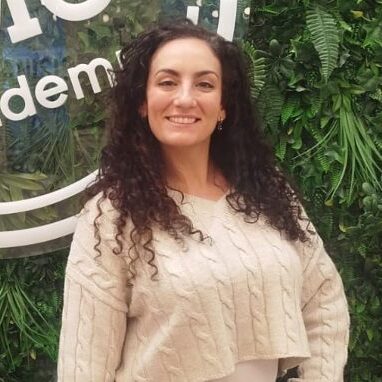
Gloria
Spanish Teacher